
AI
AI Risk Management Checklist for Secure Deployment
Model drift and prompt injection bypass traditional perimeter defenses, requiring continuous validation of data lineage and input sanitization at every inference stage.
Model drift and prompt injection bypass traditional perimeter defenses, requiring continuous validation of data lineage and input sanitization at every inference stage.

Adversaries do not need source code to steal your model. They extract proprietary weights through statistical inference on the output interface alone.

Unapproved apps often bypass security controls, creating hidden channels where sensitive data escapes without triggering any alerts or logs.

Network authentication logs often hide pass-the-hash activity because they record successful logins without revealing the credential type used during the handshake.

Agents act without human approval while assistants wait for your command, creating distinct risk profiles for enterprise security operations.

Zero trust architecture eliminates implicit trust by verifying every access request, ensuring that a breach in one segment does not automatically grant access to the entire network.

DCSync does not steal passwords; it replicates password hashes by impersonating a domain controller, bypassing traditional authentication defenses.

CVE identifiers are stable labels for flaws, not measures of severity, meaning a high CVE number does not indicate a more dangerous security risk to your systems.

Secure email gateways filter traffic before it reaches your inbox, but they cannot verify the intent behind messages that pass cryptographic checks.

Attackers mimic trusted voices to move money, exploiting the gap between human trust and automated security checks.

Leaving Bluetooth on while unpaired exposes your device to tracking and data theft, even when no connection is visible.

Sandboxing isolates code execution to contain threats, but sophisticated malware detects containment and alters its behavior to evade analysis.

Certification audits often fail not because of weak security controls, but because documentation does not match actual daily operations.

Legitimate binaries often hide malicious payloads in memory or side channels, bypassing static file hashing and traditional signature-based scanning entirely.

Most teams fail because they focus on decryption before isolating the network, allowing the malware to spread to backup systems and destroy recovery options.

Legitimate remote support software often hides in plain sight, using standard network ports to exfiltrate data before any ransomware payload activates.

The modular structure of ransomware-as-a-service shifts the attack burden to low-skill affiliates, making initial access brokers the true bottleneck for defenders.

Attackers exploit the human urge to stop annoying notifications by spamming approval requests until you accept out of frustration.
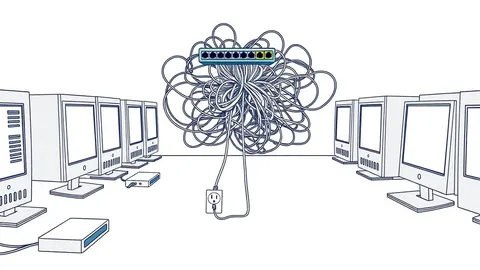
Most patch failures stem from inadequate change control rather than technical flaws, turning routine updates into system instability events that bypass security controls.

Attackers bypass perimeter defenses by turning authorized remote support software into a direct pipeline for lateral movement and data exfiltration within your network.

Move beyond checkbox compliance to assess actual vendor control effectiveness, data exposure, and contractual leverage for your supply chain.

Map your machine learning lifecycle to known attack patterns to stop data poisoning and model theft before deployment.