
Cyber Attacks
Can Password Managers Be Hacked? Risks and Mitigation
Password managers concentrate risk into one vault, so a breach exposes every account, but strong encryption and local key derivation keep data unreadable without the master key.
The Sandbox Gazette Handbook Desk is the part of the Sandbox Gazette newsroom that covers reference guides that explain the ideas behind the headlines. It is a newsroom desk, not a single person. Sections: Guides. Guides are drafted with AI assistance, carry no invented statistics and are reviewed when the facts change. It has published 91 articles so far. See the editorial policy or report an error.
Password managers concentrate risk into one vault, so a breach exposes every account, but strong encryption and local key derivation keep data unreadable without the master key.

Port scanning legality hinges on authorization and intent, not the technical act itself, making consent the primary legal shield against criminal prosecution.
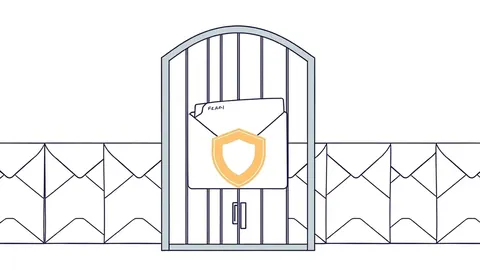
Domain authentication protocols verify message origin, but they do not protect against attackers who compromise legitimate accounts or harvest credentials through social engineering.
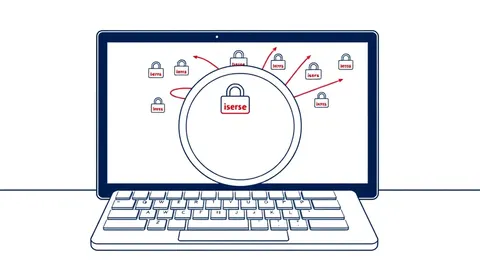
Monitoring domain registration patterns reveals impersonation attempts before users click malicious links, shifting defense from reaction to prevention.

Attackers exploit the priority rules of package managers to inject malicious code into internal systems without needing external access or credentials.

Cache poisoning often hides in standard 200 OK responses, making it invisible to traditional error-monitoring tools that only watch for failures.

Coordinated vulnerability disclosure turns chaotic researcher reports into predictable risk inputs for your patch management workflows.

Algorithmic bias emerges when historical patterns in training data reinforce existing inequalities, causing automated systems to make unfair predictions that human operators often miss.

Dynamic application security testing reveals live runtime flaws that static analysis misses, but it requires a working application and careful configuration to avoid false positives.

Prototype pollution allows attackers to inject properties into base objects, bypassing security controls and altering application logic without direct code execution.

AI transparency reveals decision logic and data lineage, exposing hidden biases and enabling effective audit trails for complex model behaviors.

Effective ransomware response stops the spread before encryption completes, preserving critical data and reducing operational downtime through structured isolation.

Most login alert noise comes from legitimate automation, not attacks. Filtering by device fingerprint and geolocation reduces alert fatigue by orders of magnitude while catching real threats.

Invoice fraud often succeeds because financial verification relies on trust in email headers rather than cryptographic proof of the sender's identity.

An AI emergency stop is not a single button but a layered architecture of input filters, state monitors, and output gates that halt processing before harm occurs.

Default remote desktop configurations often grant administrative access to any authenticated user, creating a direct path for credential theft and lateral movement within your network.

Attackers exploit your trust in familiar logos and names to bypass technical filters, making human verification the final and most fragile line of defense.

Autonomous system numbers reveal the organizational owner of IP space, allowing analysts to attribute network activity to specific entities rather than isolated hosts.

Unprotected model endpoints leak training data and proprietary logic through simple inference requests that bypass traditional network firewalls.

Attackers exploit open inference endpoints to extract training data or inject malicious prompts, bypassing traditional network perimeters through standard API calls.

Small teams often expose their code repositories to public internet attacks because they treat internal tools as inherently safe from external scrutiny.

Standard identity systems fail AI agents because they cannot verify intent, requiring policy engines that inspect reasoning traces before granting resource permissions.
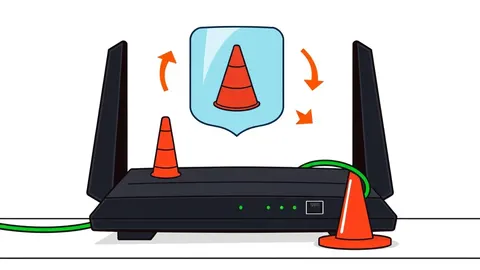
Open redirects often bypass web application firewalls because the traffic appears legitimate, requiring specific host-level filtering to stop the abuse chain.

YARA rules identify files by structural patterns rather than hashes, allowing detection of modified or obfuscated malware variants that signature scanners miss entirely.