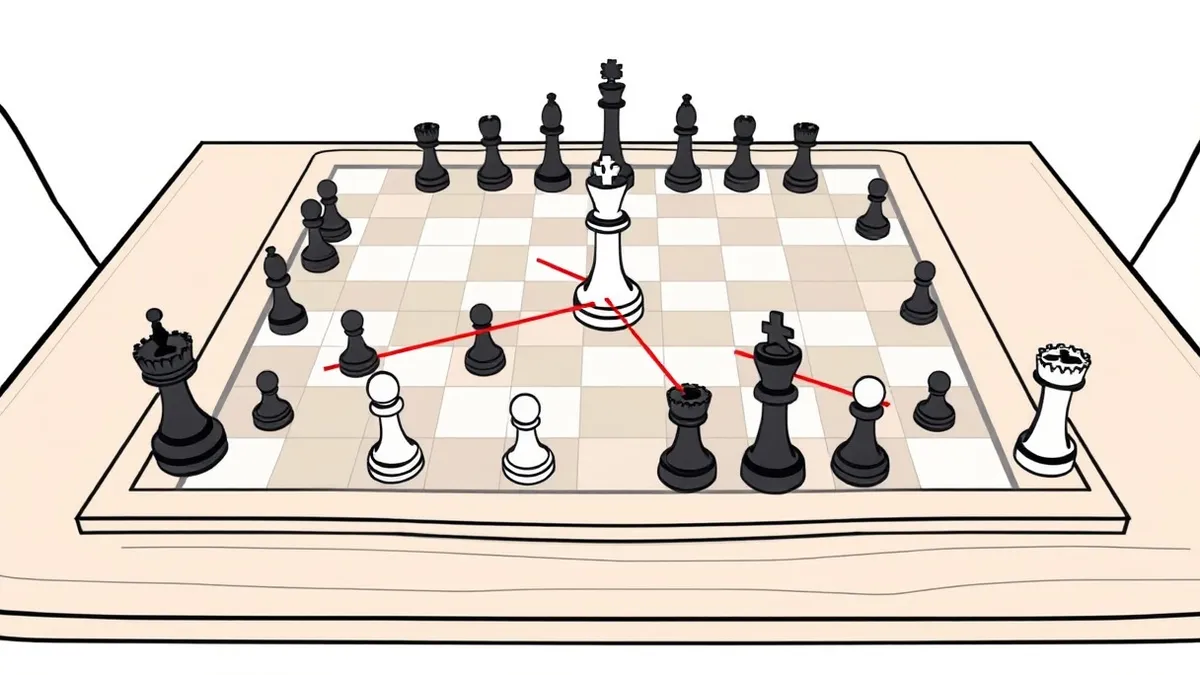
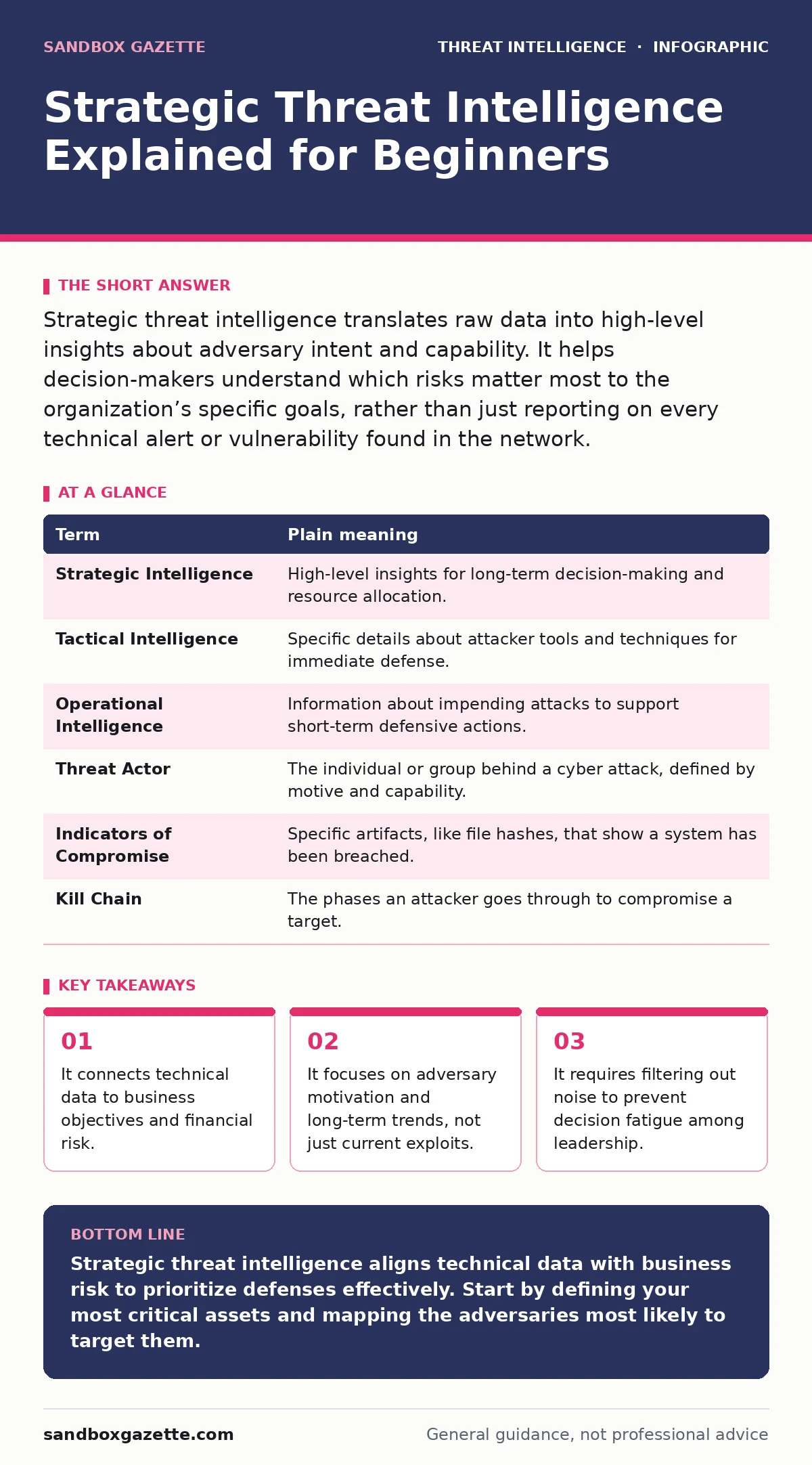
Strategic threat intelligence translates raw data into high-level insights about adversary intent and capability. It helps decision-makers understand which risks matter most to the organization’s specific goals, rather than just reporting on every technical alert or vulnerability found in the network.
The City Weather Forecast
Imagine you are the mayor of a coastal city. You have weather stations reporting wind speed, humidity, and barometric pressure every minute. This data is raw and constant. If you only looked at the numbers, you would see a spike in wind speed. You might send crews to secure loose signs. But that is tactical work. Strategic intelligence asks a different question: is a hurricane forming three hundred miles out? If yes, you evacuate neighborhoods. If no, you just tighten the bolts. The raw data is the same, but the strategic view tells you whether to spend millions on evacuation or ten thousand on maintenance.
Separating Signal from Noise
In cybersecurity, most teams drown in alerts. Every firewall log, every failed login, and every port scan generates a signal. Without strategy, you treat every signal as an emergency. Strategic threat intelligence filters this volume. It asks which signals indicate a pattern that threatens your specific business model. If you sell online retail, a DDoS attack matters more than a data leak in your internal HR server. If you are a law firm, the reverse is true. You must align the threat data with what you actually protect.
Understanding Adversary Intent
Knowing who is attacking you matters less than knowing why. A script kiddie scanning for open ports wants easy wins. A state-sponsored group wants long-term access to intellectual property. The technical indicators might look similar at first. Both might use pass-the-hash attacks to move laterally. But the strategic response differs. One requires blocking IPs; the other requires isolating sensitive servers and changing credential policies. Misidentifying the intent leads to wasted effort and false security.
The Time Horizon Difference
Tactical intelligence looks at the last hour. Operational intelligence looks at the next month. Strategic intelligence looks at the next year or more. It identifies slow-burning risks. For example, a shift in ge political tensions might mean your company becomes a target for hacktivism in the coming quarters. You cannot patch your way out of that. You must adjust your public presence, your messaging, and your incident response plans. This long view prevents surprise.
Common Points of Confusion
Many teams confuse strategic intelligence with a dashboard of charts. A pretty graph of attack sources is not strategy. It is decoration. Strategy requires narrative. It tells a story about risk. Another confusion is assuming more data equals better strategy. It does not. Too much data hides the signal. You must curate. You must ignore the irrelevant. A SIEM tool can aggregate logs, but it cannot decide which logs matter to the CEO. That decision requires human context and strategic framing.
See also: Hacktivism Risks for Small Business: Real Threats and Low-Cost Defenses · AI Risk Management Checklist for Secure Deployment
Key Terms and Definitions
To speak the same language, you must define the boundaries. Here is how the industry distinguishes the layers of intelligence work.
| Term | Plain meaning |
|---|---|
| Strategic Intelligence | High-level insights for long-term decision-making and resource allocation. |
| Tactical Intelligence | Specific details about attacker tools and techniques for immediate defense. |
| Operational Intelligence | Information about impending attacks to support short-term defensive actions. |
| Threat Actor | The individual or group behind a cyber attack, defined by motive and capability. |
| Indicators of Compromise | Specific artifacts, like file hashes, that show a system has been breached. |
| Kill Chain | The phases an attacker goes through to compromise a target. |
Practical Steps for Implementation
You do not need a large team to start. You need a process. Follow these three steps to begin building a strategic view.
- Define your crown jewels. List the three assets that would destroy your business if lost. This could be customer data, proprietary code, or reputation. Everything else is secondary.
- Map your adversaries. Identify which groups have the motive and capability to target your crown jewels. Ignore the rest. If you are a small bakery, nation-states are not your problem.
- Create a risk narrative. Write a one-page summary every quarter. Describe the top three risks to your crown jewels based on current adversary behavior. Share this with leadership.
Integrating with Daily Operations
Strategic intelligence must feed into daily operations. It should influence your security architecture. If your strategy shows that credential theft is the primary risk, you invest in multi-factor authentication. If it shows that social engineering is the risk, you invest in training. Without this link, strategy is just paperwork. Operations become reactive. You will always be chasing the latest exploit. You will see process injection attempts and block them, but you will not understand why they are happening or what comes next.
Avoiding Analysis Paralysis
The biggest risk in strategic intelligence is overthinking. You cannot predict every attack. You can only prepare for the most likely and damaging ones. Focus on probabilities. A low-probability, high-impact event like a zero-day exploit is less important than a high-probability, medium-impact event like phishing. Allocate resources accordingly. If you try to defend against everything, you defend against nothing. Your team will burn out. Your budget will vanish. Keep the scope tight.
The Value of Context
Technical tools like a SIEM provide the "what." Strategic intelligence provides the "so what." When you see an anomaly, context determines the response. Is this a DCSync attack attempt, or just a misconfigured admin script? Strategic intelligence helps you answer that. It provides the baseline of normal behavior for your specific environment. Without it, every alert is a crisis. With it, you know which alerts are noise and which are signals. This calm allows for better decisions.
Key takeaways
- It connects technical data to business objectives and financial risk.
- It focuses on adversary motivation and long-term trends, not just current exploits.
- It requires filtering out noise to prevent decision fatigue among leadership.
Strategic threat intelligence aligns technical data with business risk to prioritize defenses effectively. Start by defining your most critical assets and mapping the adversaries most likely to target them.
Frequently asked questions
How is strategic different from operational threat intelligence?
Strategic focuses on long-term trends and business risk, while operational focuses on specific, imminent threats and immediate defensive actions.
Do I need expensive tools to get strategic intelligence?
No. You need a clear understanding of your business goals and a process to filter raw data. Free sources and open standards can provide sufficient data.
How often should I update my strategic threat assessment?
Update it quarterly or whenever a significant business change occurs, such as a new product launch or entry into a new market.
Can AI replace human analysts for strategic intelligence?
AI can process data faster, but it lacks business context. Humans must interpret the data to make strategic decisions about risk and resource allocation.
How this guide was produced: written by the Sandbox Gazette editorial team with AI assistance, checked against the public references listed below, and reviewed when the facts change. See our editorial policy or report an error.