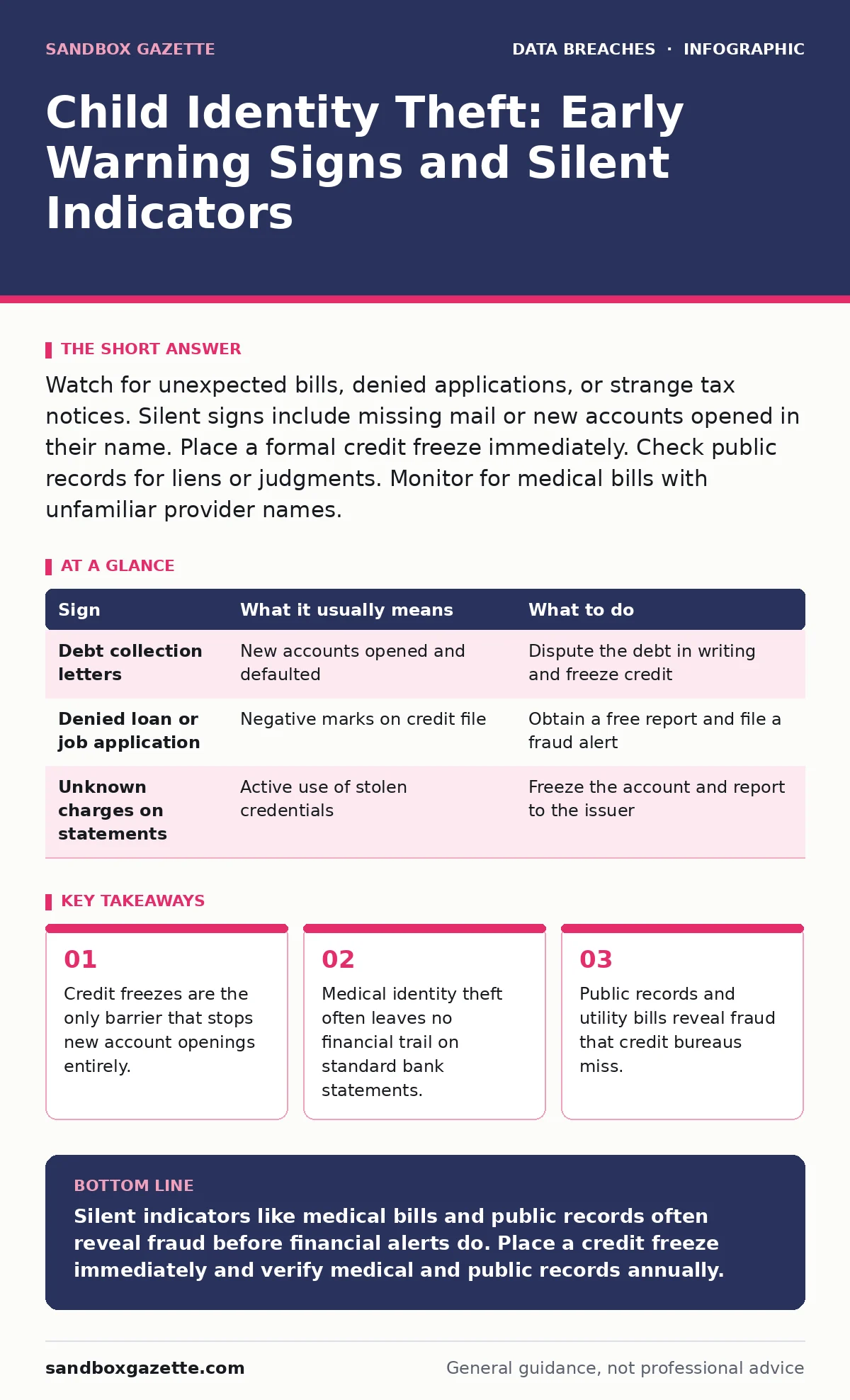
Watch for unexpected bills, denied applications, or strange tax notices. Silent signs include missing mail or new accounts opened in their name. Place a formal credit freeze immediately. Check public records for liens or judgments. Monitor for medical bills with unfamiliar provider names.
The Silence of Inactive Credit
Children rarely have established credit files. This silence is their greatest protection and their greatest vulnerability. Criminals exploit this gap because there is no baseline of normal activity to disrupt. You will not receive alerts for missed payments that never existed. The absence of a credit history means automated monitoring tools often ignore these profiles.
Imagine a fraudster uses a child’s name to open a store credit card. The account remains dormant for months. No payments are made, so no late fees are generated. The fraudster charges small amounts periodically to keep the account active. You notice nothing because you are not receiving bills for an account you did not open.
Obvious Financial Disruptions
Some signs are loud and immediate. These occur when the fraudster attempts to use the stolen identity for tangible goods or services. You may receive a letter from a debt collection agency regarding a debt your child does not owe. This is often the first tangible evidence of the breach.
Another common signal is the denial of a legitimate application. Suppose you apply for a job that requires a background check. You might also see a sudden drop in a credit score if one exists. These events force you to investigate the root cause.
| Sign | What it usually means | What to do |
|---|---|---|
| Debt collection letters | New accounts opened and defaulted | Dispute the debt in writing and freeze credit |
| Denied loan or job application | Negative marks on credit file | Obtain a free report and file a fraud alert |
| Unknown charges on statements | Active use of stolen credentials | Freeze the account and report to the issuer |
Silent Medical Identity Theft
Medical fraud is harder to detect than financial fraud. It does not always appear on a bank statement. A criminal might use a child’s health insurance information to receive expensive treatments. The hospital bills are sent to the insurance company, not the parent. You may never see the bill unless you review Explanation of Benefits statements closely.
This type of theft corrupts the child’s medical history. Future doctors may see records for conditions the child does not have. This can lead to misdiagnosis or dangerous treatment decisions later in life. The damage is clinical, not just financial. You must actively request medical records from major providers to verify accuracy.
Public Records and Utility Bills
Credit bureaus do not track everything. Criminals sometimes use a child’s identity to secure housing or utilities. They may rent an apartment in the child’s name. They might open a phone line or internet service. These activities do not always generate hard inquiries on a credit report.
Check public records for liens, judgments, or criminal records. These documents are often available online through county or state databases. A utility bill sent to your home address for a service you do not use is a red flag. It indicates someone else is using your address and the child’s name. These signs require manual verification, as automated tools rarely scan municipal records.
The Limits of Monitoring Tools
Many parents rely on credit monitoring services. These services track changes to credit files. They are useful but incomplete. They cannot detect medical fraud, public records issues, or non-credit financial crimes. Relying solely on monitoring creates a false sense of security. It is similar to relying on password leaks checks without securing the underlying accounts.
Think of monitoring as a smoke detector. It alerts you to fire but does not stop the arsonist. You need physical barriers as well. A credit freeze is a physical barrier. It requires a PIN to lift. Without the PIN, no new credit can be issued. This is more effective than an alert that arrives after the damage is done.
See also: SOC 2 vs ISO 27001: Which Standard Fits Your Security Posture · Email Encryption Best Practices for Secure Data Exchange
Immediate Containment Steps
When you spot a sign, speed matters. The first step is to place a credit freeze. Contact the three major credit bureaus. This is free and immediate. It prevents any new accounts from being opened. You must do this for all three bureaus, as criminals may check any of them.
Next, file a report with the Federal Trade Commission. This creates an official paper trail. It helps when disputing fraudulent accounts. You may also need to file a police report. Some institutions require this document to remove fraudulent charges. Keep copies of all correspondence. Document the dates and names of every representative you speak to.
Long-Term Recovery and Prevention
Recovery is a slow process. It involves contacting every creditor, utility company, and government agency that holds incorrect data. You must send dispute letters with supporting documentation. Follow up until the record is corrected. This can take months or years. Patience and persistence are required.
Prevention requires ongoing vigilance. Check the child’s credit report annually. Review medical records after major procedures. Keep physical documents secure. Do not share the Social Security number unless absolutely necessary. Treat the number like a master key. If you suspect exposure, consider third-party risk assessments for any apps or services that handle sensitive family data.
The Hidden Cost of Time
The biggest cost of child identity theft is time. It is not just the time spent disputing charges. It is the time the child’s identity is compromised. During this period, the criminal may build a history of debt. This debt follows the child into adulthood. It can affect their ability to get loans, rent housing, or find employment.
Early detection minimizes this cost. The sooner you freeze the credit, the less damage can occur. Do not wait for a letter to arrive. Proactive freezing is the most effective defense. It is a small administrative task that prevents years of remediation. This approach aligns with the principles of ISO 27001 by focusing on preventive controls rather than reactive measures.
Key takeaways
- Credit freezes are the only barrier that stops new account openings entirely.
- Medical identity theft often leaves no financial trail on standard bank statements.
- Public records and utility bills reveal fraud that credit bureaus miss.
Silent indicators like medical bills and public records often reveal fraud before financial alerts do. Place a credit freeze immediately and verify medical and public records annually.
Frequently asked questions
Is a credit freeze the same as a credit lock?
No. A freeze is a legal right that is free and harder to bypass. A lock is a service offered by some bureaus that may cost money and can be toggled on and off easily.
Can I remove my child's SSN from all records?
No. The SSN is required for tax purposes and government benefits. You cannot remove it, but you can limit who has access to it by freezing credit and monitoring records.
What if the fraud happened years ago?
You can still dispute the charges. Gather evidence that the charges were not authorized by your child. File disputes with the creditors and the credit bureaus. The statute of limitations for fraud varies by state.
How this guide was produced: written by the Sandbox Gazette editorial team with AI assistance, checked against the public references listed below, and reviewed when the facts change. See our editorial policy or report an error.