Key points
- Deepgram seeks to deploy voice AI models directly onto air-gapped laptops for native execution.
- The company expanded its Flux model to support ten languages earlier this year.
- Partnerships with Dell and Fortanix enable on-premises deployment for regulated industries.
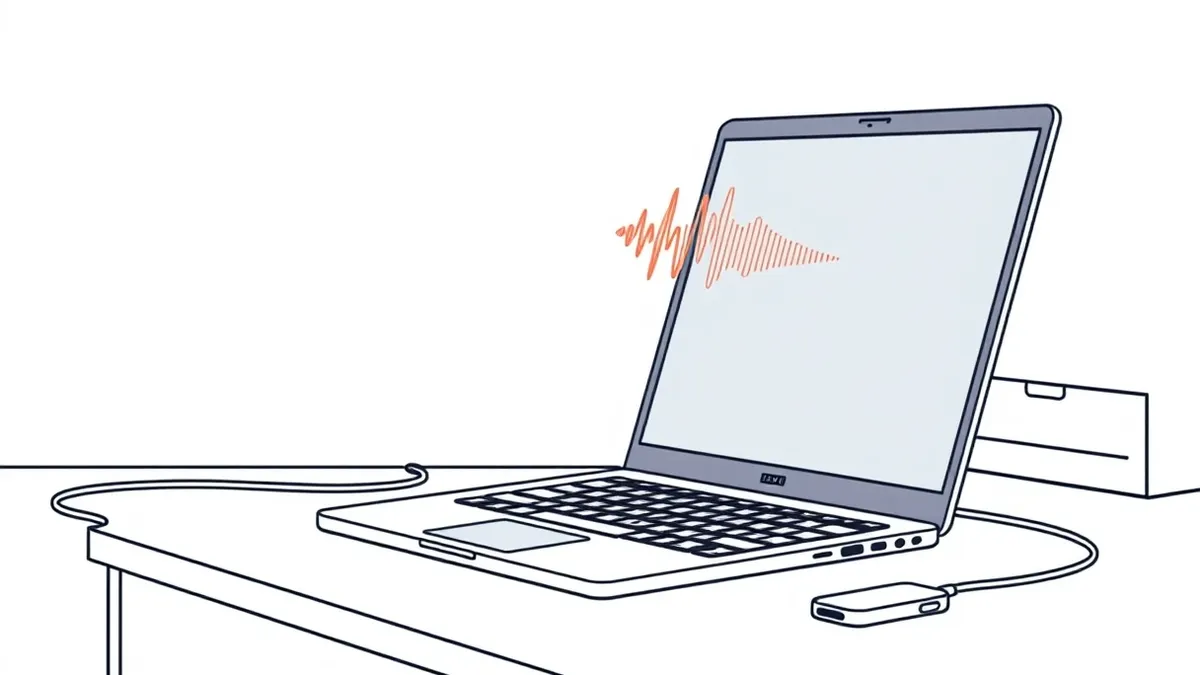
Deepgram Inc. is shifting its strategy to run voice artificial intelligence models natively on personal devices, specifically targeting air-gapped laptops. According to Nick Mann, staff technical program manager at Deepgram, the goal is to move processing off the cloud and onto local hardware. This approach addresses the growing demand for conversational interfaces that do not rely on continuous internet connectivity. The move reflects a broader industry trend toward decentralized compute resources.
By the numbers
- 10: The number of languages Deepgram’s Flux model supports after an expansion earlier this year.
- 45: The count of researchers in Deepgram’s in-house team, described by Mann as high-performing.
- 13: The number of years Deepgram has operated in the market, building expertise in noisy environments.
What the figures mean
Deepgram’s thirteen-year history has provided specialized knowledge in tuning models for high-noise settings like air traffic control and emergency medical services. Mann noted that the company assumes any released model will soon be surpassed, treating each version as a candidate for immediate retraining. With forty-five researchers consuming significant compute resources, the infrastructure demands are high. The expansion to ten languages indicates a push for broader global adoption of these voice technologies.
What to watch
A significant portion of Deepgram’s customers now host models themselves rather than relying on Deepgram’s cloud. A recent partnership with Fortanix Inc. brings private, on-premises voice AI solutions to regulated industries that require strict data isolation. Dell Technologies supplies the underlying infrastructure and runs models in its Customer Solution Center Innovation Lab. Mann highlighted that deployments range from small businesses using compact Nvidia GB10 systems to large enterprise setups. The next frontier is student laptops, which carry substantial AI potential outside traditional data centers.
What to do and how to stay safe
- Audit your organization’s policy on running unvetted AI models on locally connected devices.
- Verify that air-gapped systems have strict controls on how models are loaded and updated.
- Monitor vendor announcements regarding on-device processing capabilities for your specific hardware.
- Ensure that data processed locally by voice AI tools does not leak to external endpoints.
Step-by-step guide: Detect Shadow AI: Network Logs, Process Trees and Hidden Signals
General security guidance from the Sandbox Gazette newsroom. It is not confirmed advice from the organisations named in this story.