Key points
- CVE-2026-108269 affects Privasys RA-TLS Clients prior to version 0.5.0
- The flaw carries a CVSS score of 9.1, rated as critical severity
- Attackers can relay genuine enclave quotes to spoof trusted connections
Privasys RA-TLS Clients versions prior to 0.5.0 contain a critical vulnerability that undermines remote attestation security. According to the National Vulnerability Database, this flaw allows attackers to bypass verification checks by relaying valid enclave quotes. The issue affects the Rust and Go challenge verifiers included in the multi-language utilities.
The vulnerability stems from how these clients handle the binding of attestation data. Before version 0.5.0, the verifiers accepted quote ReportData that was bound to the certificate public key and client nonce. However, this data was not bound to the active TLS session before permitting application traffic. This gap creates a window for manipulation.
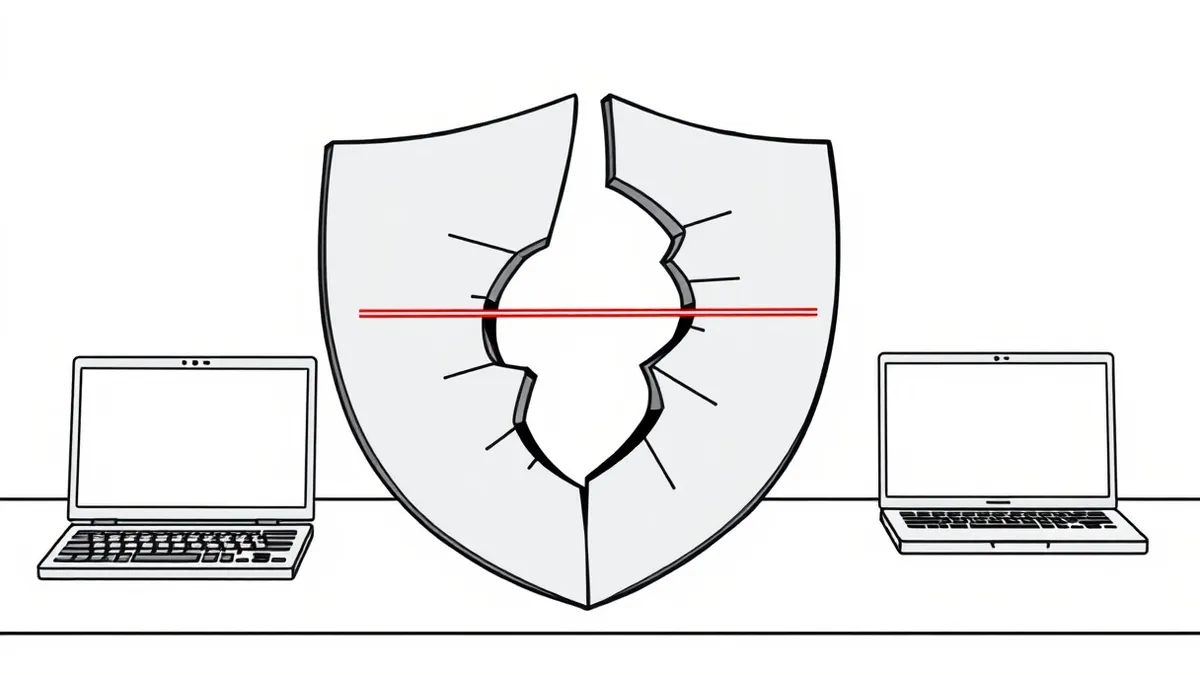
An attacker who obtains an enclave TLS private key can exploit this design flaw. By relaying a genuine quote onto a different connection, the attacker can cause the client to accept their terminated connection as the legitimate attested enclave. This effectively spoofs the identity of the secure enclave to the verifying client.
By the numbers
- CVSS 9.1: The critical severity score assigned to CVE-2026-108269 by the NVD
- 0.5.0: The first version of Privasys RA-TLS Clients that fixes this vulnerability
- CWE-346: The weakness classification for origin validation errors in this case
What the figures mean
The CVSS score of 9.1 indicates a severe risk to systems using these specific client libraries. This high score reflects the ease with which an attacker can compromise the integrity of the attestation process. The vulnerability is classified under CWE-346, which relates to origin validation errors.
The fix arrived in version 0.5.0 of the Privasys RA-TLS Clients. This update ensures that quote ReportData is properly bound to the active TLS session. Without this binding, the verification process cannot distinguish between a legitimate connection and a relayed one.
What to watch
Security teams should audit their deployments for any use of Privasys RA-TLS Clients older than version 0.5.0. The risk is specific to environments relying on these Rust and Go utilities for verifying attested TLS connections. Organizations should monitor for unusual connection patterns that might indicate relay attacks.
What to do and how to stay safe: Privasys
- Inventory all systems using Privasys RA-TLS Clients and identify versions prior to 0.5.0
- Update affected Rust and Go client libraries to version 0.5.0 or later immediately
- Monitor network logs for anomalies that suggest TLS session hijacking or quote relaying
- Review enclave TLS private key storage to prevent unauthorized access that enables this attack
Step-by-step guide: Patch Management Implementation: A Step-by-Step Rollout Plan
General security guidance from the Sandbox Gazette newsroom. It is not confirmed advice from the organisations named in this story.
Frequently asked questions
What is CVE-2026-108269?
It is a critical vulnerability in Privasys RA-TLS Clients prior to version 0.5.0 that allows remote attestation relay attacks.
How does the attack work?
An attacker with an enclave TLS private key relays a genuine quote to another connection, spoofing the attested enclave identity.
Which versions are affected?
All versions of Privasys RA-TLS Clients prior to 0.5.0 are vulnerable, including both Rust and Go implementations.