Key points
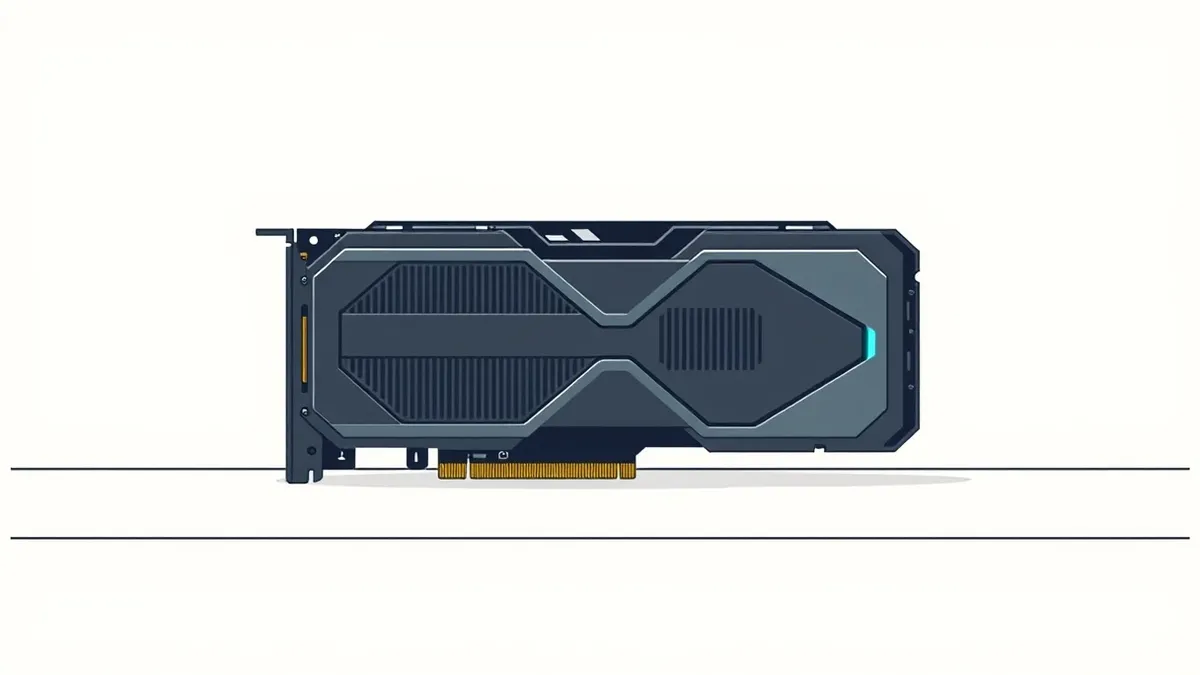
- The Intel D270 is a discrete GPU designed for data center environments.
- Maximum memory capacity is listed as 480 GB of LPDDR5X.
- The product belongs to Intel’s D-series of discrete graphics units.
Intel has published technical specifications for its D270 discrete GPU, a component targeted at data center infrastructure. According to the product details page on intel.com, the accelerator supports up to 480 GB of LPDDR5X memory. This specification highlights the hardware’s focus on high-capacity data processing for enterprise and cloud workloads.
The announcement surfaced on Hacker News, where it generated significant discussion among developers and infrastructure engineers. The thread, which reached the front page, included 166 points and 75 comments. Participants examined the implications of using LPDDR5X in server-grade discrete graphics rather than traditional GDDR or HBM variants.
By the numbers
- 480 GB is the maximum LPDDR5X memory capacity listed for the D270.
- 166 points was the score the Hacker News discussion thread received.
- 75 comments were posted in the thread analyzing the GPU specifications.
What the figures mean
The 480 GB memory figure indicates a design optimized for large-model inference or data-intensive applications. LPDDR5X is typically associated with mobile and low-power devices, making its use in a data center GPU notable. This choice may suggest a balance between bandwidth efficiency and power consumption for specific server architectures.
Hacker News users debated the practical benefits of this memory configuration. Some comments questioned the latency characteristics of LPDDR5X compared to high-bandwidth memory. Others noted that the capacity allows for larger model sizes to reside entirely in GPU memory, reducing reliance on slower system RAM.
The D-series branding aligns with Intel’s broader strategy to offer discrete graphics options for enterprise customers. The D270 sits within this lineup as a high-memory variant. Its specifications suggest a target market that prioritizes memory capacity over raw compute throughput or ultra-low latency.
What to watch
Infrastructure teams should monitor how Intel integrates this GPU into broader server platforms. The performance characteristics of LPDDR5X in data center workloads will be a key metric for adoption. Benchmarks comparing the D270 to competitors using HBM or GDDR will provide clarity on its real-world utility.
Software vendors may need to optimize their libraries to take advantage of the large memory pool. Memory management strategies could differ from those used with traditional GPU architectures. Early adopters will likely focus on AI inference tasks that benefit from keeping large models resident in memory.
What to do and how to stay safe: Intel
- Review current hardware procurement plans to see if the D270 fits your memory capacity requirements.
- Monitor official Intel documentation for benchmark results comparing LPDDR5X performance to other memory types.
- Assess whether your existing software stack is optimized for high-memory, lower-bandwidth GPU architectures.
- Subscribe to Intel’s developer updates for any driver or firmware changes that affect data center deployments.
Step-by-step guide: Detect Shadow AI: Network Logs, Process Trees and Hidden Signals
General security guidance from the Sandbox Gazette newsroom. It is not confirmed advice from the organisations named in this story.
Frequently asked questions
What is the maximum memory supported by Intel’s D270 GPU?
The D270 supports up to 480 GB of LPDDR5X memory, according to Intel’s product page.
Where was this information first discussed publicly?
The specifications were discussed on Hacker News, where a thread about the D270 reached the front page.
Is the D270 a discrete or integrated GPU?
Intel lists the D270 as a discrete GPU designed for data center environments.